Boho Rainbow Trinket Dish STL File - Dig
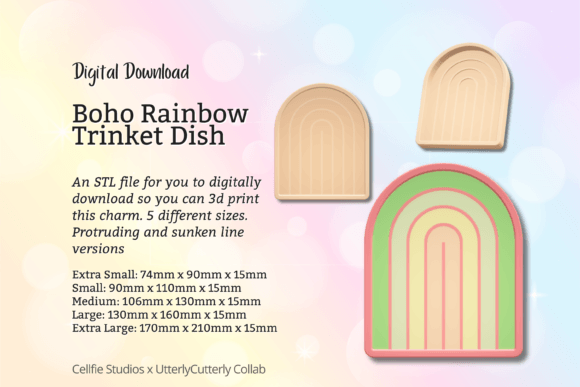
The Boho Rainbow Trinket Dish STL File - Dig represents a specific category of digital assets designed for additive manufacturing. This is not a physical product but a downloadable 3D model file intended for users with access to 3D printing technology. The design features a minimalistic container characterized by sunken and protruding line patterns, evoking a bohemian aesthetic that integrates well with various interior styles. For individuals researching digital files for home production, understanding the scope, utility, and technical requirements of this asset is essential before purchase.
Understanding the Product Offering
This digital download consists of five distinct size variations of the trinket dish, allowing users to select dimensions appropriate for their specific storage needs or display areas. The pack includes both sunken and protruding line versions, offering visual variety within the same design language. The available dimensions are as follows:
- Extra Small: 74mm x 90mm x 15mm
- Small: 90mm x 110mm x 15mm
- Medium: 106mm x 130mm x 15mm
- Large: 130mm x 160mm x 15mm
- Extra Large: 170mm x 210mm x 15mm
All sizes share a uniform height of 15mm. The design prioritizes ease of printing, minimizing the need for extensive support structures in standard slicing software configurations. This accessibility makes it a suitable entry point for hobbyists while remaining functional for experienced print engineers looking to produce decorative items efficiently.
Evaluation of Use Cases and Applications
The primary function of the Boho Rainbow Trinket Dish STL File - Dig is organizational and decorative. Its compact footprint allows it to serve multiple roles depending on the environment in which it is placed. On a work desk, it can organize small office supplies like paperclips, thumbtacks, or USB drives. In a living area or bedroom, it functions as an attractive catch-all for keys, jewelry, or coins near the entryway or nightstand. The bathroom application is also viable for holding rings or earrings, provided the material selected is moisture-resistant.
Beyond personal use, the file supports commercial applications. Users may choose to manufacture physical prints to sell as handmade goods. The minimalistic design appeals to a broad market segment interested in modern, uncluttered decor. Additionally, the flat, open nature of the dish makes it an ideal substrate for resin infills. By printing a base layer and filling the recessed areas with epoxy resin, creators can add color, texture, or embedded objects to enhance the visual appeal.
Technical Considerations and Material Selection
When evaluating this STL file, the choice of filament significantly impacts the final outcome. Standard thermoplastics like PLA (Polylactic Acid) are commonly used due to their ease of printing and availability. However, the interaction between the printed object and additional materials requires careful planning.
If the goal is to incorporate resin infills, specific printing parameters must be adjusted. A thicker top layer is recommended to ensure structural integrity during the pouring process and to prevent leakage through the first few layers of the print. Furthermore, users should be aware of chemical compatibility issues. Certain pigments, such as alcohol inks, may interact unpredictably with some filaments. These inks can sometimes be absorbed by the plastic, altering the color or causing surface degradation. Testing a small sample before committing to a full production run is a prudent step.
Weighing Benefits Against Limitations
One of the primary advantages of utilizing this digital file is cost efficiency compared to purchasing pre-made ceramic or wooden dishes. Once the initial investment in a 3D printer is made, the marginal cost of producing additional units is limited to the price of filament. The ability to scale production across five different sizes offers versatility without requiring the design of new models.
However, there are tradeoffs to consider. The quality of the output is entirely dependent on the hardware used. Lower-resolution printers may struggle to render the fine details of the sunken and protruding lines, resulting in a less defined aesthetic. Unlike mass-produced ceramics, 3D printed items often exhibit visible layer lines unless post-processing techniques like sanding or acetone smoothing are employed. Additionally, the durability of the item varies by material; while PLA is rigid, it can become brittle over time or deform under high heat, making it less suitable for outdoor use or hot environments.
Decision Framework: Is This File Right for You?
Selecting the Boho Rainbow Trinket Dish STL File - Dig depends largely on your current capabilities and objectives. This asset is a strong fit if you already own a 3D printer and are looking to expand your library of printable household items. It is particularly valuable for those who enjoy customizing their home decor or those interested in exploring hybrid fabrication methods involving resin.
Conversely, alternatives may be more appropriate for certain users. If you do not have access to 3D printing equipment, purchasing a ready-made dish from a retailer will likely save money and time compared to outsourcing the printing service. Similarly, if the requirement is for a highly durable, food-safe, or heat-resistant container, traditional materials like glazed ceramic or stainless steel remain superior choices, as most consumer-grade 3D printing filaments do not meet these standards.
For users considering resale, the competitive landscape is significant. While the design is unique, the barrier to entry for competitors is low since the STL file format is easily replicable. Success in selling physical prints would rely heavily on marketing, branding, and finishing quality rather than the exclusivity of the file itself.
Conclusion
The Boho Rainbow Trinket Dish STL File - Dig offers a versatile, minimalist solution for organizing small items and enhancing interior aesthetics. With five size options and dual textural variations, it provides ample flexibility for personal projects or small-scale production. However, realizing its full potential requires an understanding of 3D printing mechanics, material limitations, and post-processing techniques. By carefully weighing the benefits of customization against the constraints of the technology, users can determine if this digital asset aligns with their specific goals and resources.