Earring Hygiene Try on Stick Clay Cutter
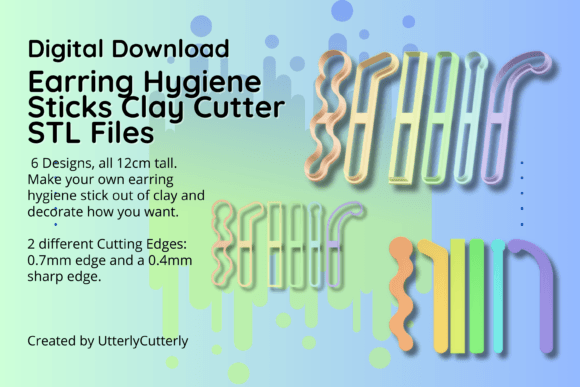
In the competitive landscape of jewelry retail, particularly for small business owners and independent creators, maintaining a balance between product presentation and hygiene is a critical operational challenge. The Earring Hygiene Try on Stick Clay Cutter represents more than just a novelty tool; it is a strategic asset designed to streamline your sales process while protecting both your inventory and your customers. This digital download provides access to six distinct designs of 12cm tall sticks, engineered specifically for those who require a clean, professional method to display earrings without direct contact.
For entrepreneurs managing online listings or attending physical fairs, the decision to adopt this tool impacts customer trust and operational efficiency. By utilizing a dedicated clay cutter mechanism integrated into a try-on stick, you eliminate the risk of cross-contamination that often occurs when multiple customers handle the same pair of earrings. This approach aligns with modern consumer expectations for safety and sanitation, positioning your brand as conscientious and professional.
Strategic Integration in Jewelry Sales Operations
The implementation of the Earring Hygiene Try on Stick Clay Cutter should be viewed through the lens of operational strategy rather than simple utility. When you are preparing to list items on e-commerce platforms or setting up a booth at a craft fair, every element of your display contributes to the perceived value of your work. Direct handling of jewelry by potential buyers can lead to oils, dirt, and moisture transferring to the piece, potentially damaging delicate finishes or requiring extensive cleaning before the next sale.
By introducing a barrier-free yet hygienic solution, you protect your assets. The clay cutter design allows the earring post to pass through cleanly, securing the item in place for display or trying on without the need for hands to touch the jewelry itself. This is particularly vital for high-value pieces or those made from porous materials like silver, which tarnish easily upon contact with skin oils. For marketers and content creators, this ensures that photos and videos taken for listings remain pristine, reflecting the true quality of the product.
Furthermore, the ability to produce these sticks via 3D printing offers a layer of supply chain resilience. Instead of relying on external vendors for disposable plastic holders, you gain control over your inventory. The digital file allows you to print exactly what you need, when you need it, reducing waste and ensuring a consistent aesthetic across all your displays. This self-sufficiency is a key component of sustainable business practices for freelancers and small business owners alike.
Design Versatility and Creative Planning
The inclusion of six different designs within this digital package is not merely an aesthetic choice; it is a strategic response to diverse branding needs. Whether your jewelry style is minimalist, bohemian, industrial, or vintage, there is likely a corresponding stick design that complements your visual identity. Consistency in branding extends beyond logos and color palettes; it encompasses the tools used to present your products. A cohesive look reinforces brand recognition and professionalism.
When planning your product launch or seasonal collection, consider how the specific geometry of the clay cutter interacts with your earring styles. Some designs may offer better stability for heavy statement pieces, while others might be optimized for lightweight studs. The 12cm height provides an ideal viewing distance for customers, allowing them to appreciate the scale and detail of the earrings without the obstruction of a hand. This thoughtful consideration of ergonomics enhances the customer experience, making the browsing process smoother and more enjoyable.
For educators and hobbyists interested in the intersection of technology and art, these files serve as an excellent starting point for exploring additive manufacturing. They demonstrate how digital design can solve real-world problems in traditional crafts. However, success depends on understanding the nuances of your own equipment. The provided settings—using a 0.4mm nozzle at a print speed of 40 mm/sec—are a baseline. Experienced practitioners know that fine-tuning parameters based on filament type, ambient temperature, and printer calibration is essential for achieving the structural integrity required for repeated use.
Decision-Making and Implementation Guidelines
Adopting the Earring Hygiene Try on Stick Clay Cutter requires a clear understanding of your workflow and goals. Before committing to printing a large batch, it is prudent to test a single unit. Assess how well the clay holds the earring post under tension and whether the release mechanism functions smoothly. This iterative testing phase prevents resource wastage and ensures that the final product meets your quality standards. If you are new to 3D printing, consult community forums or tutorials to adjust your slicer settings for optimal adhesion and strength.
Consider the context in which you will use these sticks. In a busy market environment, durability becomes paramount. You may need to experiment with infill percentages or wall thicknesses to ensure the sticks withstand frequent handling. Conversely, for static online photography, a lighter print with lower infill might suffice, saving material and time. The flexibility of the digital format allows you to adapt the production process to your specific constraints.
It is also important to recognize the limitations of this tool. While it excels at hygiene and display, it does not replace the need for proper storage solutions when items are not in use. The clay cutter is a transitional tool, bridging the gap between storage and customer interaction. Relying on it exclusively without a broader organizational system could lead to clutter or disorganization. Integrate it into a comprehensive workflow that includes pre-display sanitization and post-sale packaging protocols.
Risks of Unintentional Use and Mitigation
Without a clear strategy, the introduction of new tools can sometimes create friction rather than flow. A common pitfall is assuming that the printed object will perform identically across all printers. Variations in machine calibration can result in parts that are too loose to hold an earring securely or too tight to allow for easy insertion. Ignoring these variables can lead to frustration and damaged prints, wasting both time and filament.
Another risk lies in the commercial application. While the license included with this download permits the creation of physical products for sale, it is crucial to understand the scope of your own brand's liability. Ensure that your marketing materials accurately describe the product as a hygiene aid and not a guarantee against all forms of contamination. Transparency builds trust; overpromising on the capabilities of a 3D printed tool can damage your reputation if expectations are not met.
Additionally, be mindful of the environmental impact of your printing choices. While 3D printing reduces shipping emissions associated with purchasing physical stock, it consumes electricity and plastic filament. Optimize your print runs to minimize waste, perhaps by nesting multiple designs in a single print job or using recycled materials where possible. This aligns your operational methods with the growing consumer demand for eco-conscious businesses.
Long-Term Value and Brand Positioning
Ultimately, the decision to utilize the Earring Hygiene Try on Stick Clay Cutter is an investment in your brand's long-term viability. It signals to your customers that you care about their health and the longevity of your products. In an era where consumers are increasingly discerning about the ethics and safety of their purchases, such details differentiate you from competitors who rely on outdated, less sanitary methods.
As you scale your operations, the ability to quickly reproduce these tools becomes a significant advantage. You are no longer limited by the inventory levels of third-party suppliers. You can respond instantly to spikes in demand during holiday seasons or special events by simply hitting the print button. This agility is a hallmark of modern, successful small businesses.
To maximize the return on this investment, treat the digital file as a core component of your intellectual property toolkit. Document your successful print settings, share insights with your network, and continuously refine your approach. By doing so, you transform a simple download into a sophisticated operational strategy that supports growth, creativity, and customer satisfaction. Remember, the goal is not just to sell earrings, but to cultivate a relationship built on trust, quality, and innovation.